
Recently, we had the pleasure of sitting down with Dr.Eva Maria Novoa, one of our LongTREC project supervisors, whose groundbreaking work in RNA biology, specifically in the emerging field of epitranscriptomics, has been recognised with the 2024 National Young Talent Research Award by the Fundació Catalana per a la Recerca i la Innovació. This prestigious accolade is an important milestone in her career, marking not only her amazing personal achievements but also the rising influence of epitranscriptomics in advancing our understanding of RNA biology and its translational applications.
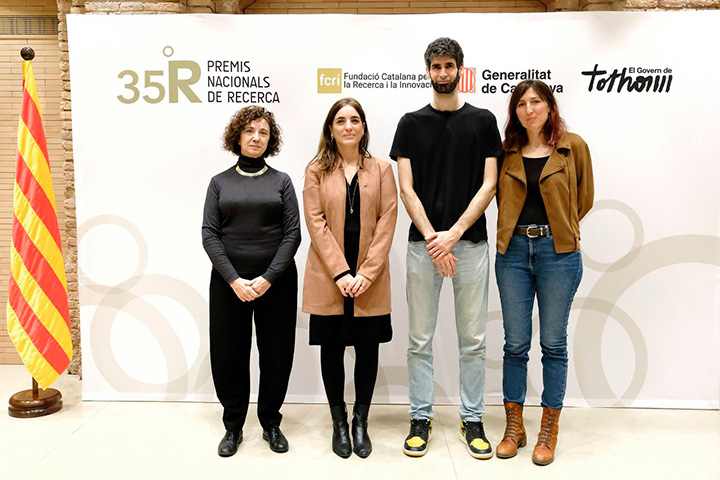
Eva Novoa (right) receiving the 2024 National Young Talent Research Award
Epitranscriptomics explores the diverse chemical modifications occurring on RNA molecules, which play a crucial role in regulating gene expression without changing the underlying nucleotide sequence. These modifications, such as N6-methyladenosine (m6A), pseudouridine (Y), and 5-methylcytosine (m5C), can affect RNA stability, splicing, transport, and translation. By uncovering how these dynamic marks influence cellular functions, epitranscriptomics offers fresh insights into the complex regulatory networks that control development, stress responses, and disease, positioning it as a promising frontier in molecular biology and therapeutics.
The Novoa lab at the Centre for Genomic Regulation (CRG) in Barcelona studies RNA, its modifications, and the importance of epitranscriptomics in biological systems. Their overarching research goals include understanding RNA-mediated inheritance across generations, deciphering the role of RNA modifications in health and disease, and designing new early diagnostic and prognostic tools for widespread diseases such as cancer.
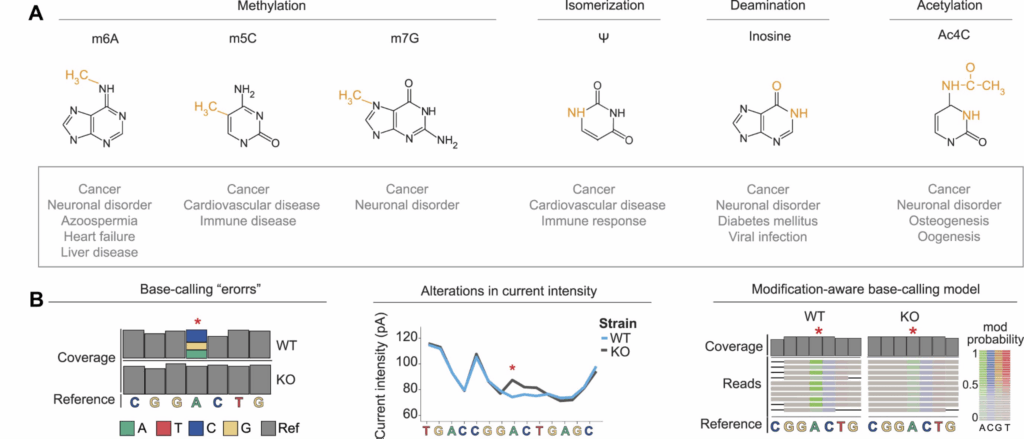
Illustration of a subset of possible RNA modifications, how they can be detected with ONT sequencing and benchmarked for accuracy – (Katopodi et al., 2025)
Dr. Novoa’s academic path has brought her to many locations across the world, and she has found herself back in the city where she undertook her undergraduate degree. She earned a B.Sc. in Biochemistry from the University of Barcelona in 2007, followed by an M.Sc. in Bioinformatics from Pompeu Fabra University in 2009. In 2012, she completed a Ph.D. in Biomedicine at the Institute for Research in Biomedicine (IRB) in Barcelona. She then moved to the U.S. for postdoctoral training at MIT and the Broad Institute from 2013 to 2014. In 2016, she became a Group Leader and Senior Postdoctoral Fellow at the Garvan Institute of Medical Research in Sydney. Two years later, she returned to Barcelona to lead her group at the Centre for Genomic Regulation (CRG).
Eva Maria has to date already received numerous prestigious grants, including support from the European Research Council (ERC, 2022), the Spanish Association Against Cancer (AECC, 2021), MERCK (2021), the Spanish Ministry of Science and Innovation (MICINN, 2018), the ARC Foundation (2018), the Human Frontier Science Program (HFSP, 2014), EMBO (2013), and La Caixa Foundation (2008). Her contributions have also been recognised with several awards, such as the Young Researcher Prize from SEBBM-IBUB, the Young Researcher Award from the Catalan Society of Biology (2018), and the Fisher Scientific Young Investigator Prize (2013), among others. She is currently an EMBO Young Investigator.
During our conversation, Dr. Novoa reflected on her scientific journey and the key moments that have shaped her career trajectory.
From Curiosity to Cutting-Edge Science
Scientific curiosity often achieves its foundation at a young age. We were captivated as Dr. Novoa recalled the early sparks of her scientific passion:
"I've always been very interested in science, and have always been a very curious person. However, although this might sound strange, for a long time I did not want to become a PI. However, after some years, I started to see that with some effort, a reasonable work-life balance could be achieved while also being a scientist. In this regard, the society, the scientific community, and the funding agencies are now starting to be aware that in order to support scientists, especially those with young children, it is important to provide opportunities and flexibility to support a healthy work-life balance."
Her path took an unexpected turn during her PhD, when a discovery reshaped her view of RNA biology:
"I was fascinated by molecular biology shortly after starting my undergraduate studies in Biology. During my PhD, we unexpectedly found that RNA modification enzymes were major drivers shaping codon usage and tRNA evolution. This made me think that if RNA modifications could be drivers of such evolutionary forces, the functional consequences of their presence in RNA molecules had yet to be revealed."
In reflecting on the journey from a budding scientist witnessing awards as a PhD student to becoming an award recipient herself, Dr. Eva Maria Novoa shares a heartfelt perspective on what this recognition signifies for her career.
"This is a very special recognition for me, as I attended the prize awards when I was a PhD student, and now it is myself who will be receiving this prize. It is a major recognition for the work that our team has been doing at the CRG, as well as to the importance of the epitranscriptomics research field, and the impact that this field can have both in understanding basic RNA biology and its potential translational applications."
Advancing the Frontiers of RNA Research
Epitranscriptomics is a field that has grown greatly in recent years, primarily enabled by new technological advances. As the field matures, we wonder what could be next in terms of direction for the field.
Looking to the future, Dr. Novoa detailed the next steps for her lab:
"A major effort in the lab will be related to dissecting the functional relevance of RNA modification heterogeneity that we have been uncovering in the last few years (across tissues, cell types, or disease states, such as cancer)."
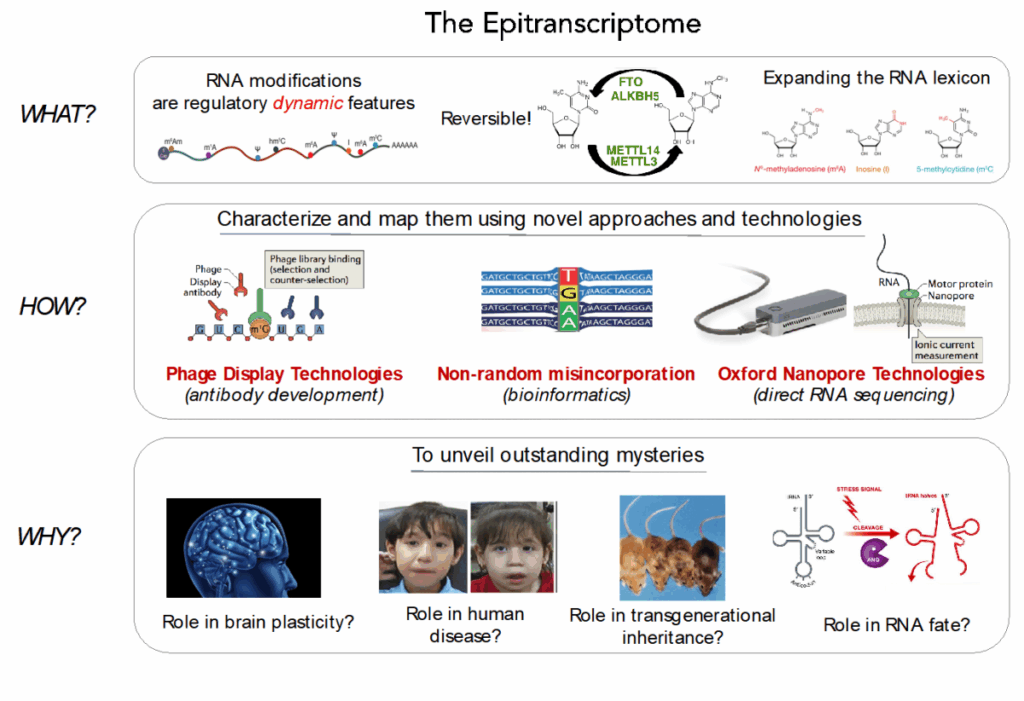
(Illustrations adapted from: Novoa et al., Nat Rev Mol Cell Biol 2017; Imanishi et al., Chem Communic 2017; Li et al., Nature Methods 2017; Hauenschild et al., Nucl Acids Res 2015; Stoecklin and Diederichs, EMBO J 2014) – From the Novoa Lab webpage @ CRG
But of course, science depends on scientists, and so the positive future of so many areas of science is dependent on supporting scientists in training and early career researchers.
Dr Novoa also voiced her concerns about supporting early-career researchers:
"I think that better funding opportunities for PhD students and postdocs are needed. The cost of living is really increasing in the cities where top universities and research centers are located, making academic research a less attractive option every year, because salaries have been increasing more modestly than the cost of living. Nowadays, PhD students can spend up to 50% of their salary on housing (a room in a shared apartment), and this is completely unsustainable. We should start considering 'institute-supported' housing options to alleviate this situation, or increase their salaries according to the cost of living, which has increased dramatically in the past few years."Her vision for the future leaves much to ponder about nurturing emerging talent in a challenging economic climate.
Embracing Challenges and Championing Diversity
Being a leader in science is undoubtedly time-consuming, and juggling this with life outside work is something many people can struggle with. This can be even more difficult with family commitments. Raising children often disproportionately affects female scientists, who still bear the majority of caregiving responsibilities, and this imbalance can be a significant factor contributing to slower career progression and underrepresentation in senior academic positions. We asked Dr. Novoa about the challenges she faces balancing her personal and professional life. Dr. Novoa candidly discussed these challenges:
"Raising three little children while keeping up with a research group (with all that it implies: travels, writing papers, grants, committees) is a daily challenge :)"
She also highlighted broader issues in the scientific community, particularly around gender balance:
"I think this is slowly improving, but much more support is still needed at many different levels. Also, the number of requests that female PIs receive (at many levels, conferences, committees, PhD theses, etc.) is often much higher than the equivalent requests received by male PIs, precisely because there are fewer female PIs, and they want their committees to be balanced. So this is a challenge that can only be solved once female PIs start to be equal in representation to male PIs."
Inspiration, Advice, and Personal Passions
Curious about the personal inspirations behind her scientific career, we asked Dr. Novoa about a historical figure she’d love to share a meal with. Her answer was both thoughtful and inspiring:
"I would like to have dinner with Rosalind Franklin and hear her version of the story of how DNA structure was discovered, which I am sure would be extremely exciting."
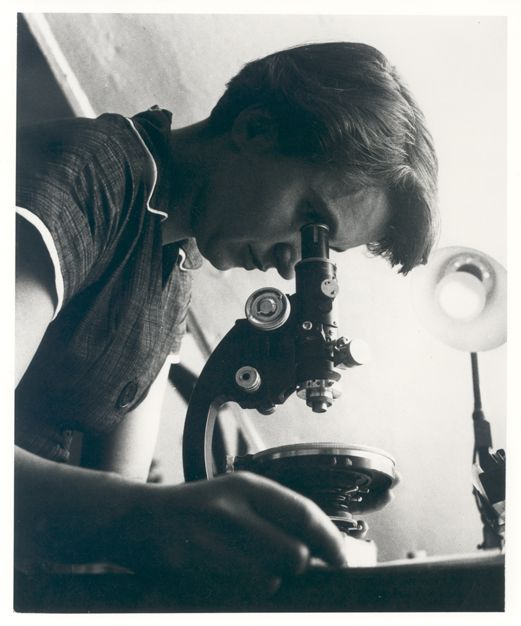
Rosalind Franklin with a microscope in 1955. Biology, M.L. of M., 1955
For those aspiring to a career in research, especially young girls, she offered this advice:
"I would say that the scientific career can be very demanding, so they must be ready for that. But it can also be really magical, as every day is different, and it is completely wonderful to discover new things every day and see how the fruit of your work can slowly translate to benefits for society."
When not immersed in research, Dr. Novoa finds balance on the volleyball courts:
"I am a beach volleyball lover, and have played volleyball for many years. You will find me playing at the beach in front of CRG, usually after work, one or two days per week."
Science by the Sea: Research Opportunities at Barcelona’s CRG
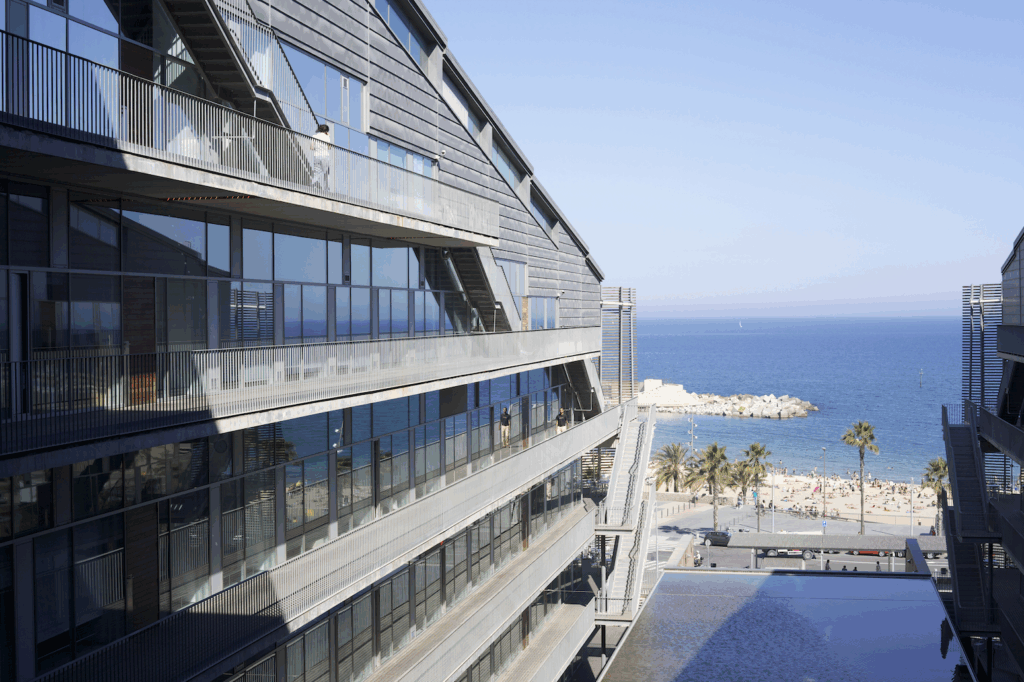
View from the terrace of CRG, Barcelona
Throughout our interview, it was evident that the Novoa Lab is not only at the forefront of groundbreaking research—it’s also a vibrant hub of opportunity nestled in one of Europe’s most dynamic scientific environments. Located at the Centre for Genomic Regulation (CRG), the lab enjoys a prime spot on Barcelona’s seafront, where world-class science meets Mediterranean lifestyle. The CRG itself is renowned for fostering cutting-edge research in genomics and molecular biology, and its unique setting, right on the beach, offers an inspiring backdrop for collaboration and creativity. Recent highlights from the Novoa Lab include innovative projects in antibody design, ERC-funded cancer liquid biopsy research, and pioneering studies in tRNA biomarkers and cardiac biology. With major grants supporting investigations across cancer, reproduction, and post-transcriptional regulation, the lab is often open to recruiting postdocs, PhD students, technicians or bioinformaticians. Candidates with expertise in RNA biology, Nanopore sequencing, or machine learning are especially encouraged to connect with Dr. Eva Novoa at eva.novoa@crg.eu to enquire about becoming part of this multidisciplinary, fast-moving team.
Unveiling the Complexity of the Epitranscriptome
A fundamental challenge lies at the heart of the Novoa Lab’s research: understanding how gene expression is regulated with surgical precision. By combining advanced experimental techniques, such as RNA sequencing, polysome profiling, and Oxford Nanopore direct RNA sequencing, with state-of-the-art computational methods, the team is unraveling the complex orchestration of post-transcriptional regulation. This research not only deepens our understanding of basic RNA biology but also paves the way for new therapeutic avenues for diseases like cancer and infertility.
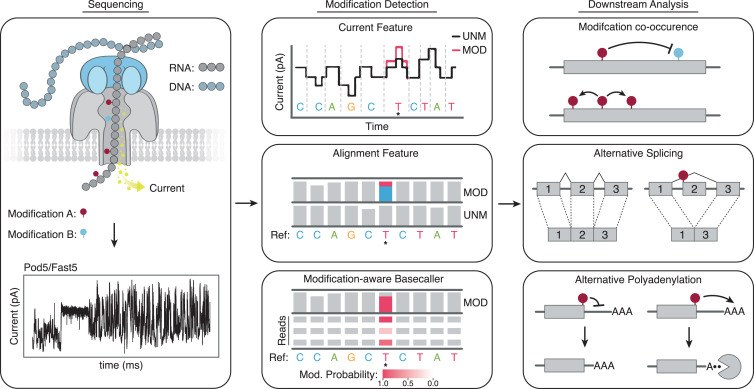
Schematic overview of the use of direct RNA sequencing for modification detection and potential downstream analyses (Diensthuber and Novoa, 2025)
Dr. Eva Novoa’s journey is one of passion, perseverance, and scientific progress. From her early days as a curious undergraduate to her current role as a celebrated group leader, honoured with the 2024 National Young Talent Research Award, her story inspires all who dream of making a meaningful impact in science. As our interview concluded, it was clear that the future of RNA biology is brighter than ever, with the Novoa Lab at the cutting edge of epitranscriptomics.